

UpDown Monitor Stands
UpDown Neo Slim Monitor Arm
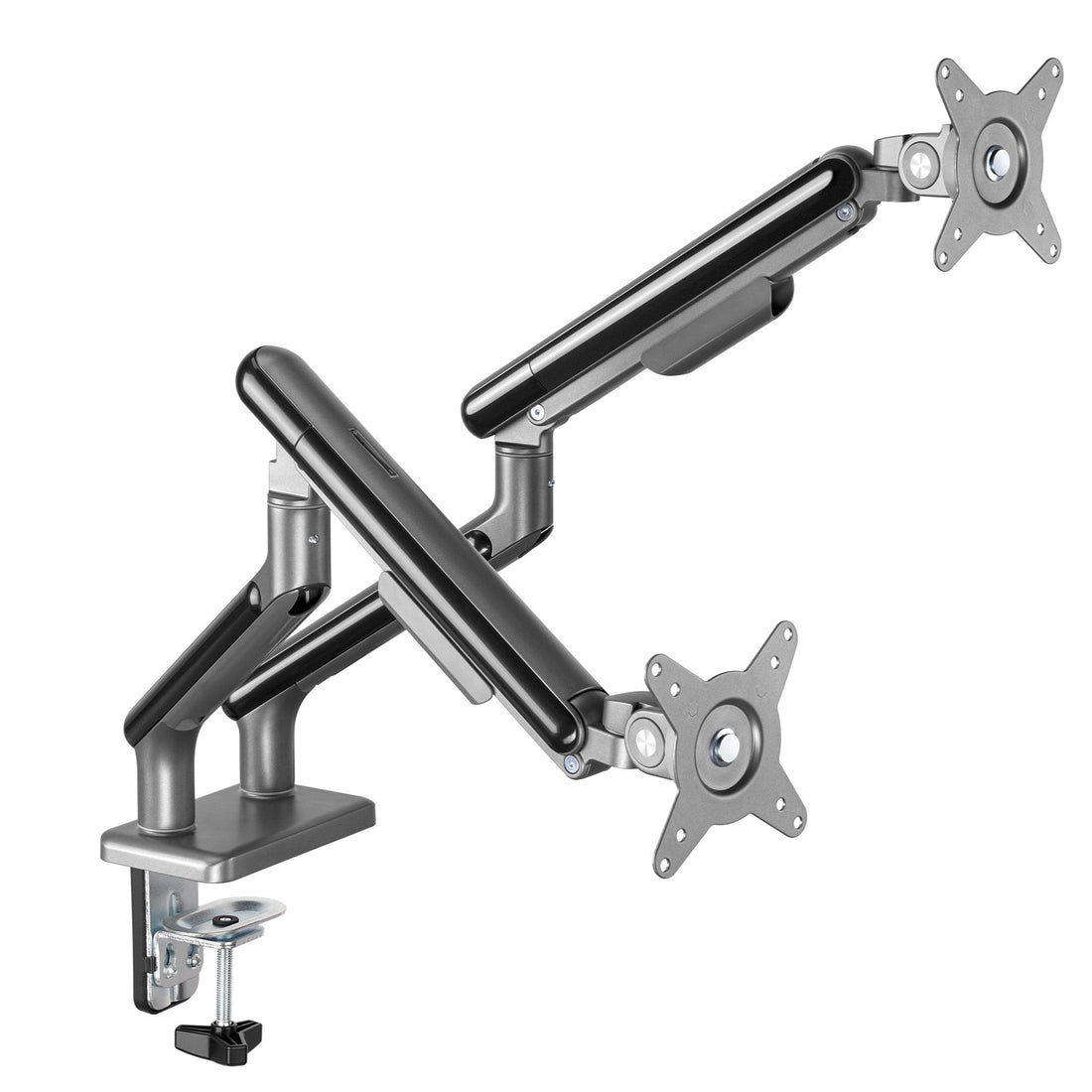
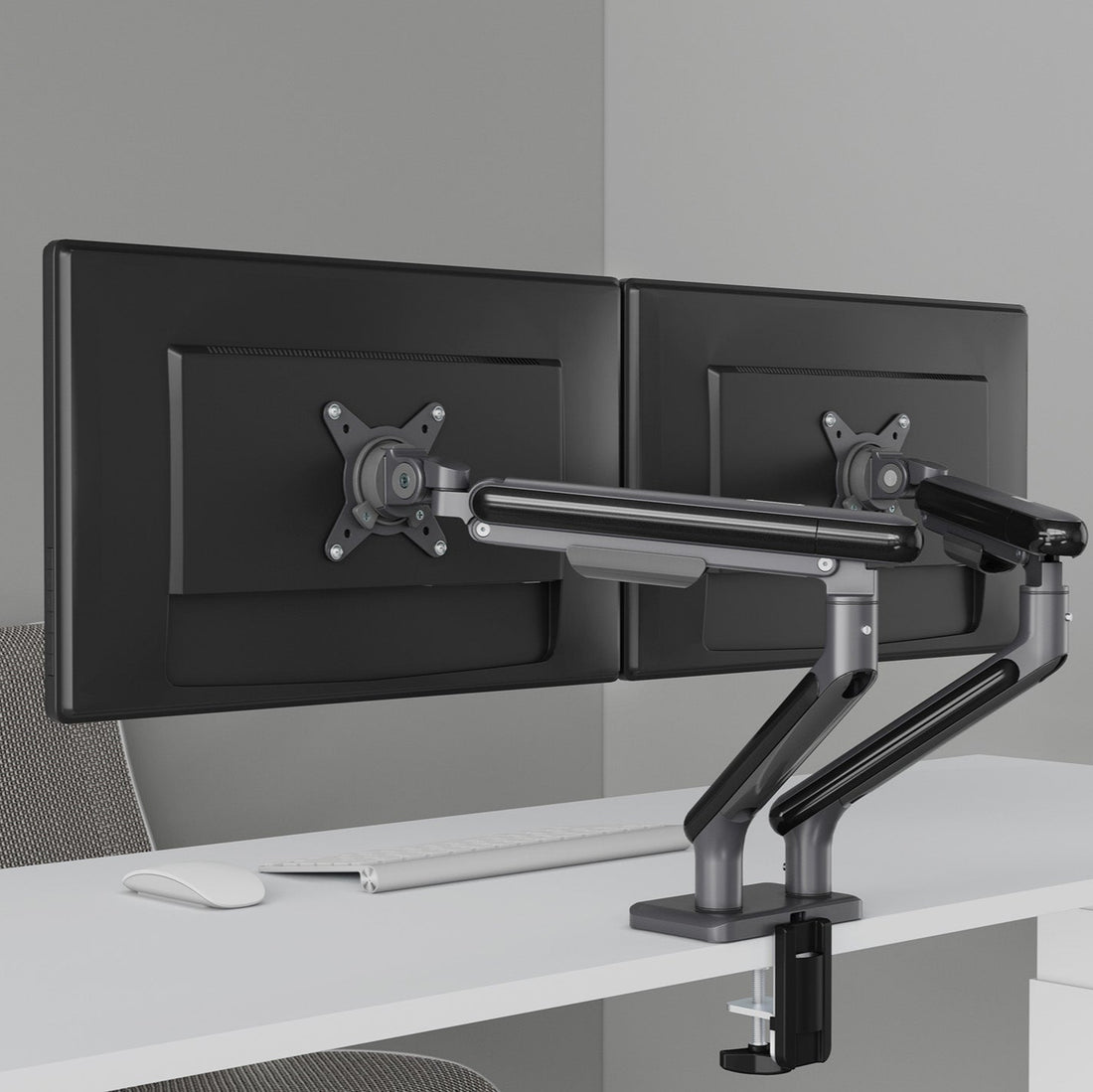
UpDown Neo Slim Dual Monitor Arm
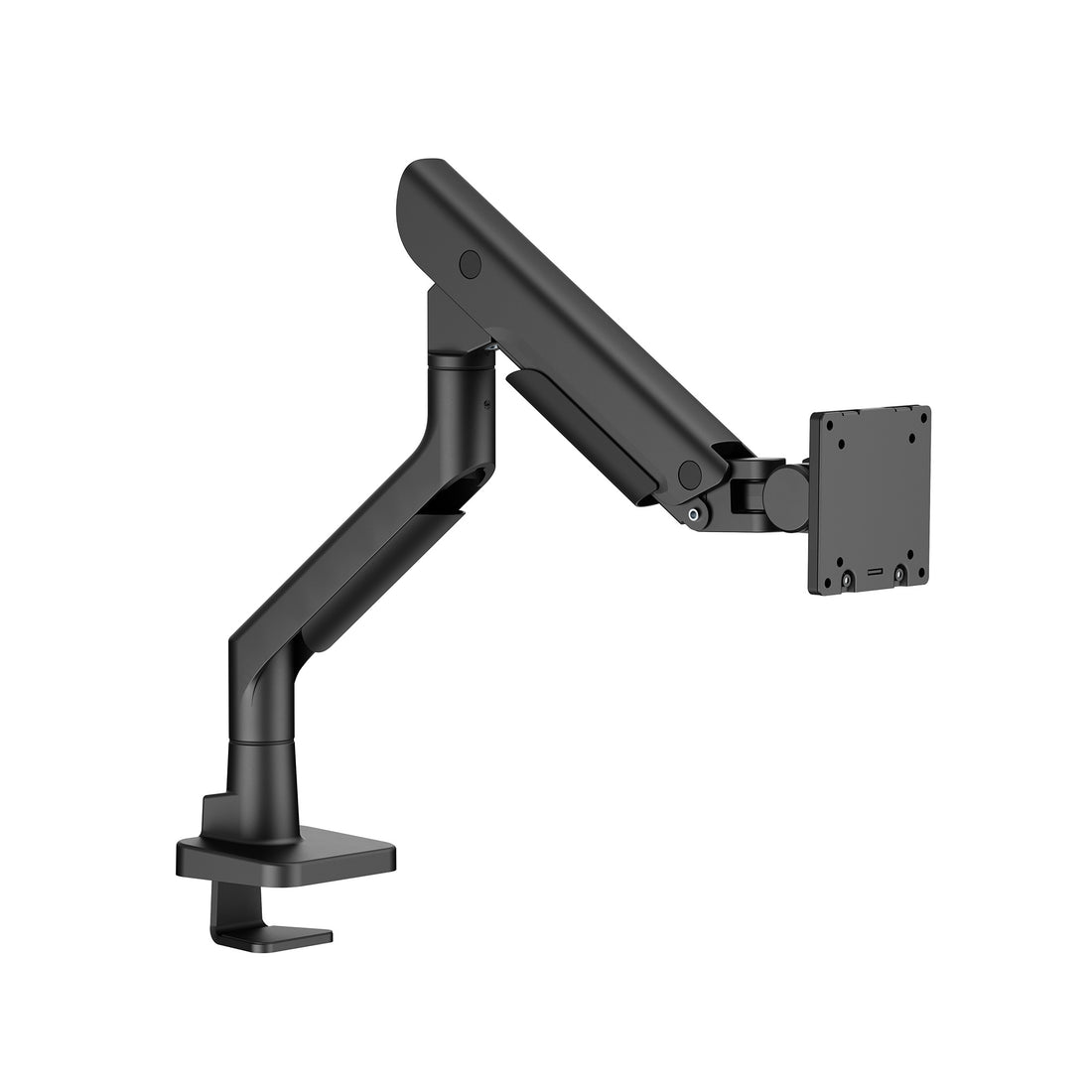
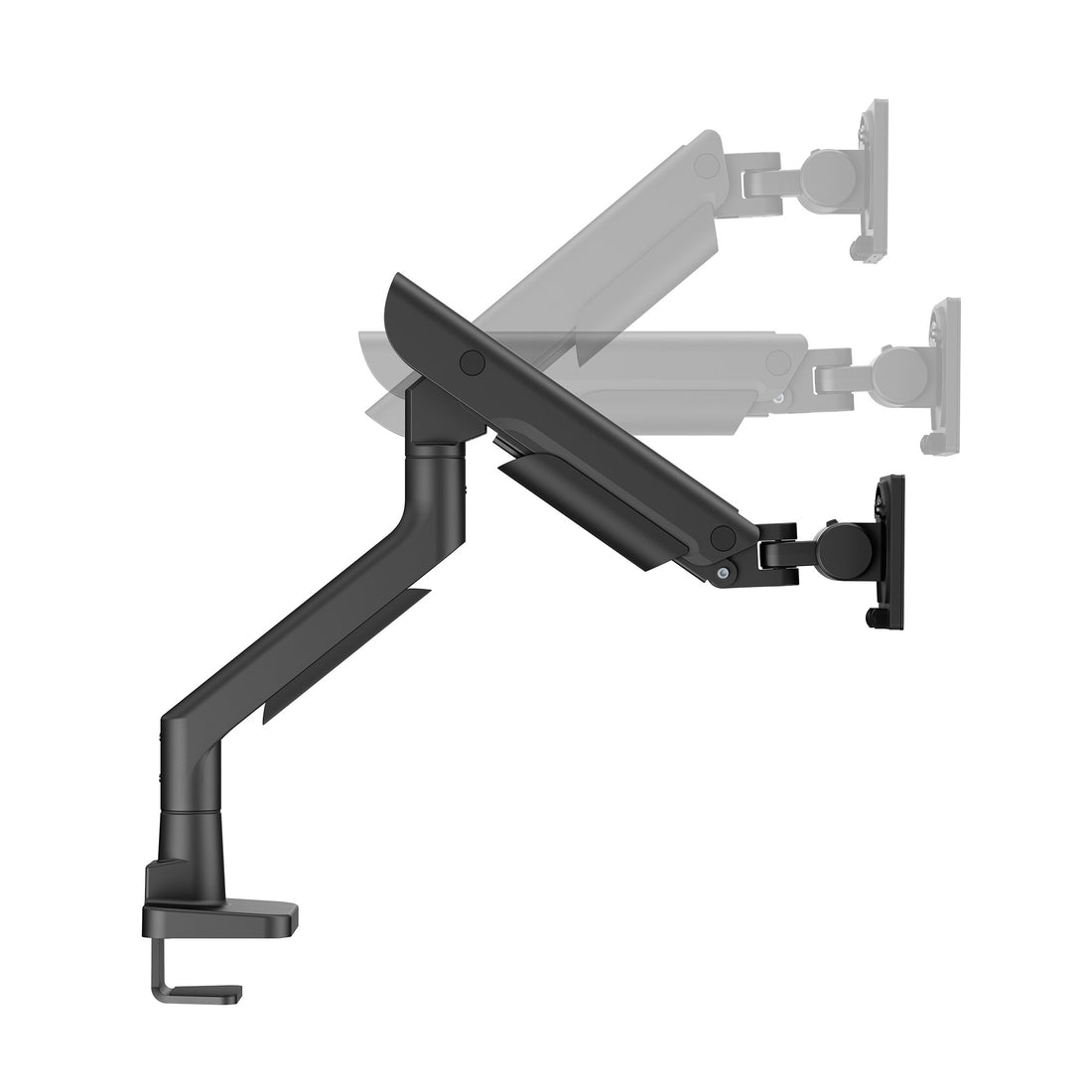
UpDown Heavy Duty Monitor Arm
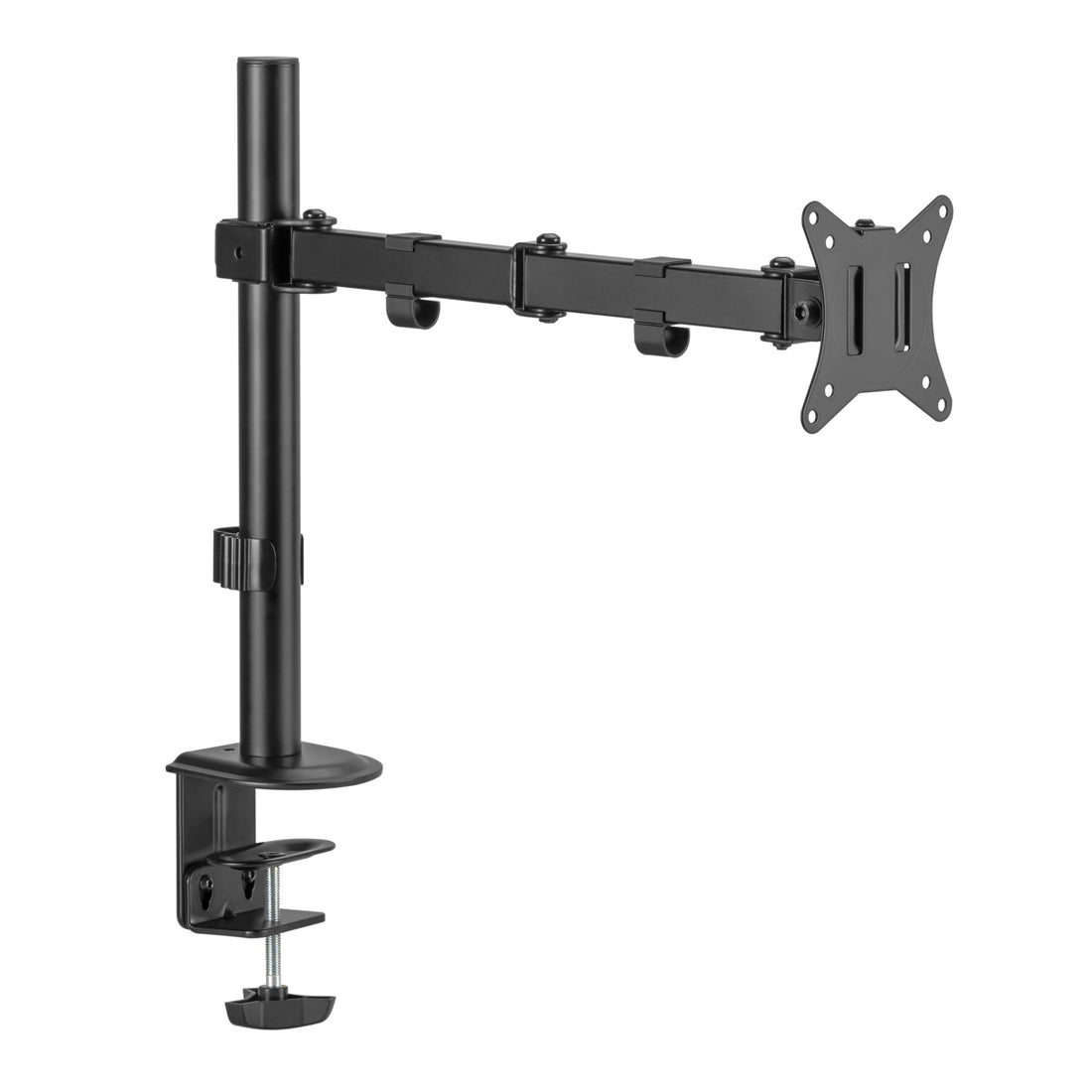
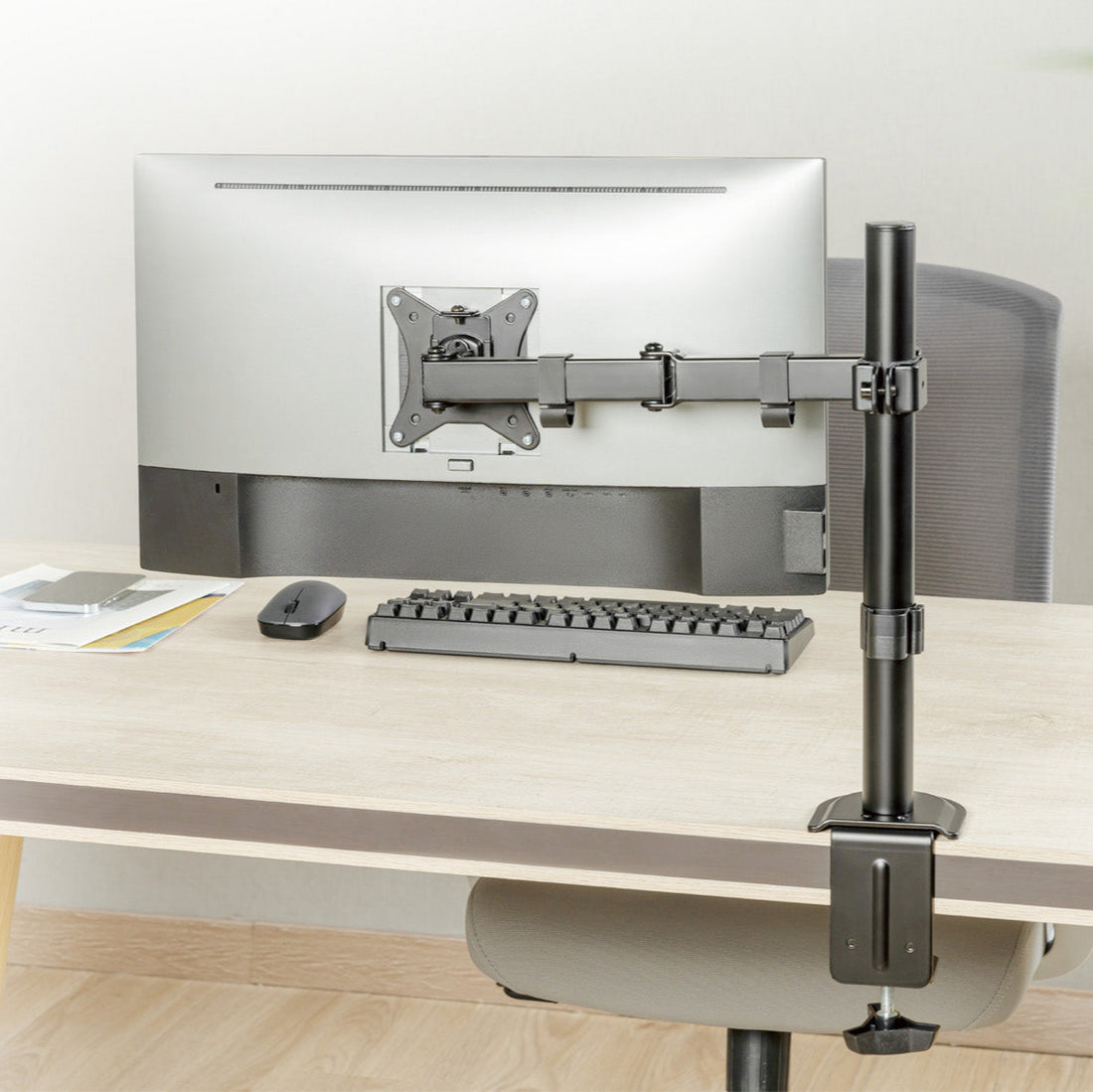
UpDown Monitor Mount Single
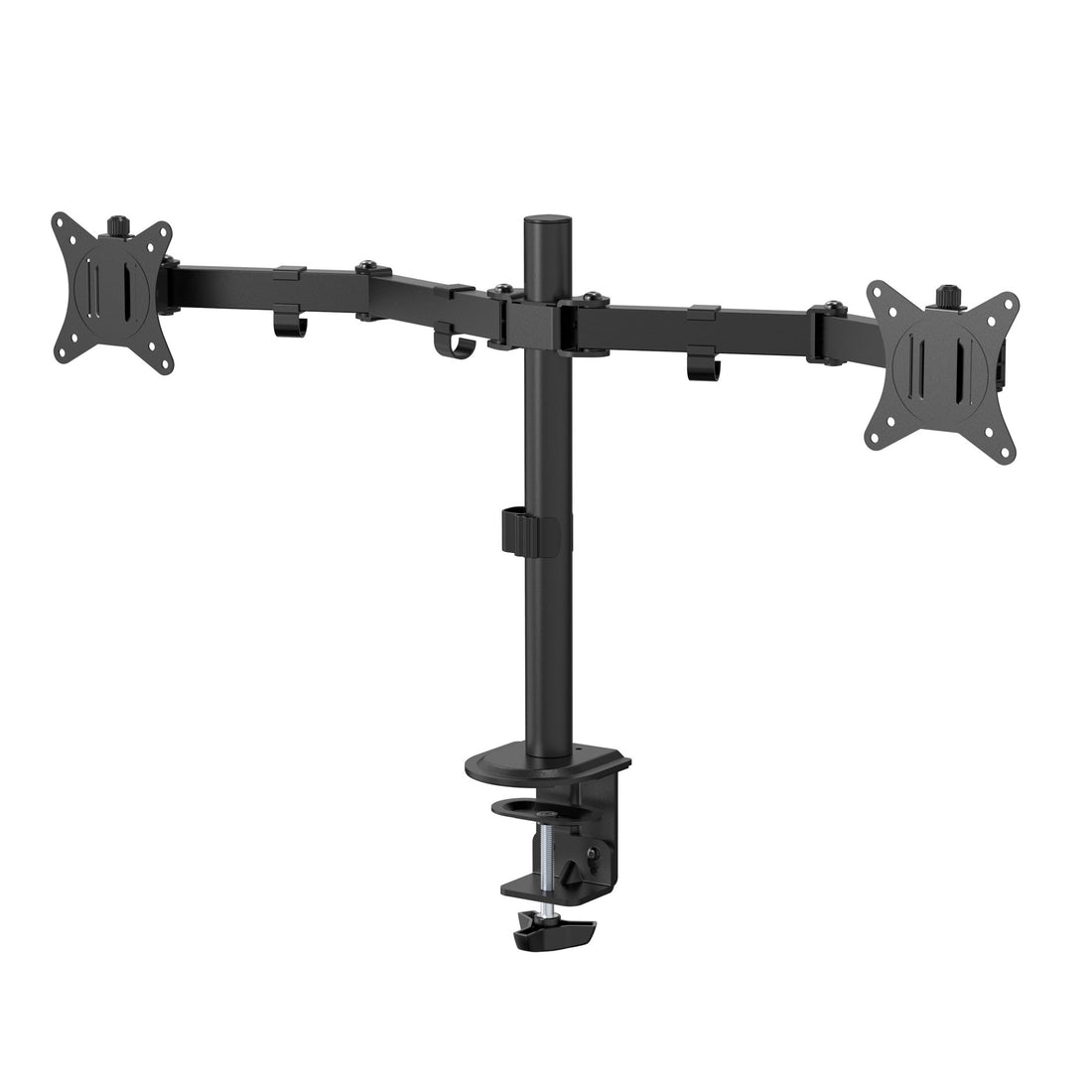
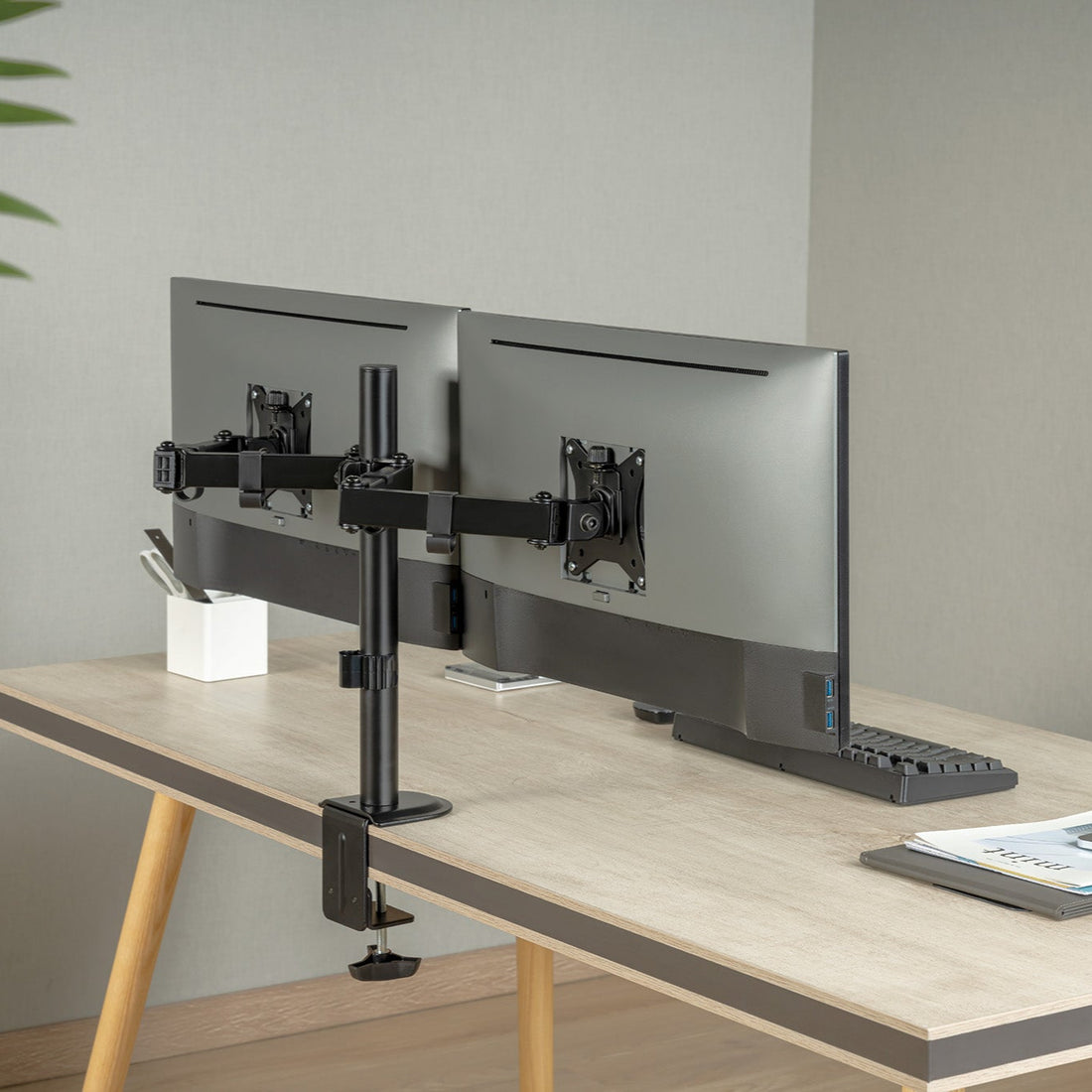
UpDown Monitor Mount Dual
- Featured
- Most relevant
- Best selling
- Alphabetically, A-Z
- Alphabetically, Z-A
- Price, low to high
- Price, high to low
- Date, old to new
- Date, new to old
50,000+ Happy Customers Across Australia
Buying guide: monitor arm, monitor mount or monitor stand?
There are several ways to raise your monitor and create a more comfortable workstation. The best option depends on how much adjustability you need, whether your monitor is VESA compatible and the look you want for your desk.

Choose a monitor arm if:
You want the greatest freedom to reposition your screen.
Monitor arms allow you to adjust the height, viewing distance and angle of your monitor and are particularly useful if you regularly change working positions or alternate between sitting and standing.
They also lift the monitor completely away from the desktop, helping maximise usable desk space.

Choose a monitor mount if:
You want to lift one or two monitors off the desktop but don't need to reposition them frequently.
Monitor mounts use a central pole with adjustable mounting points. They provide less movement than articulated monitor arms but are a simple and economical option for creating a more organised workstation.

Choose a monitor stand if:
You want a simple way to raise your monitor without attaching anything to the monitor itself.
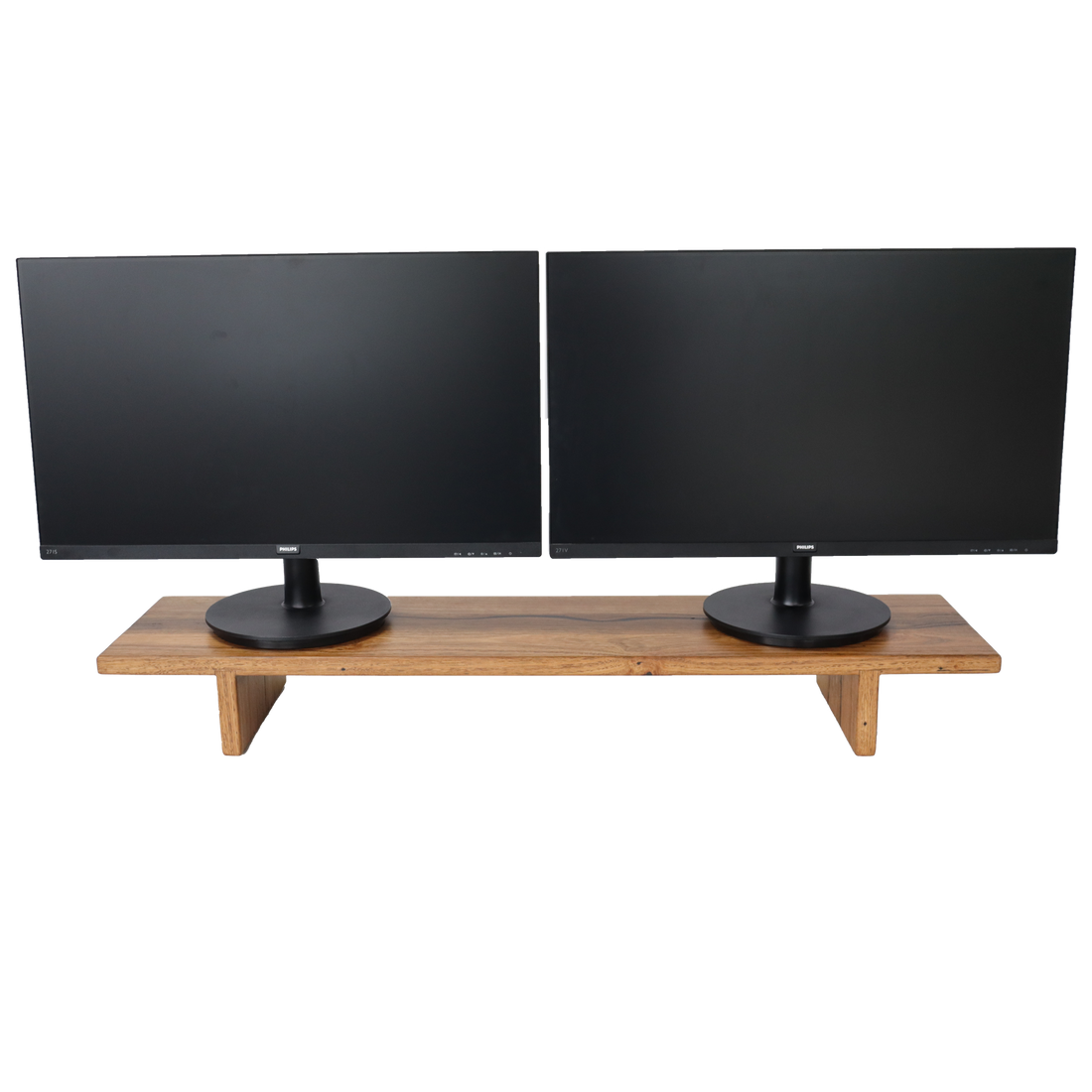
An UpDown Monitor Stand sits directly on your desktop, with your existing monitor base positioned on top. This means you don't need a VESA-compatible monitor and there's no clamp or grommet installation required.
Monitor stands are a particularly good option if you rarely need to change the position of your screen, want a simple, installation-free solution or have a monitor that isn't VESA compatible
UpDown Monitor Stands are made in wide selection of finishes, allowing you to coordinate the stand with your UpDown desktop or create a contrasting look.
How much adjustment do you need?
For maximum adjustment:
Choose a monitor arm. It allows you to reposition the monitor's height, distance and angle whenever required.
For some adjustment at a lower price point:
Consider a monitor mount. Its position can be configured during setup and then left securely in place.
If you mainly need additional monitor height:
A monitor stand may be the simplest solution. It raises the monitor using its existing factory stand, with no need to attach a VESA plate or mounting hardware to the screen.Do I need a VESA-compatible monitor?
That depends on which option you choose.
Monitor arms and monitor mounts
These attach directly to the rear of your monitor and therefore require a compatible VESA mounting pattern. Most UpDown monitor arms and monitor mounts use the commonly found 75 x 75mm and 100 x 100mm VESA patterns.
Monitor stands don't require VESA compatibility.
Your monitor simply sits on the stand using its existing base. This makes a monitor stand a useful alternative for monitors that cannot easily be attached to an arm or mount.
Which UpDown Desk Option Should I Choose?
For a standard single monitor
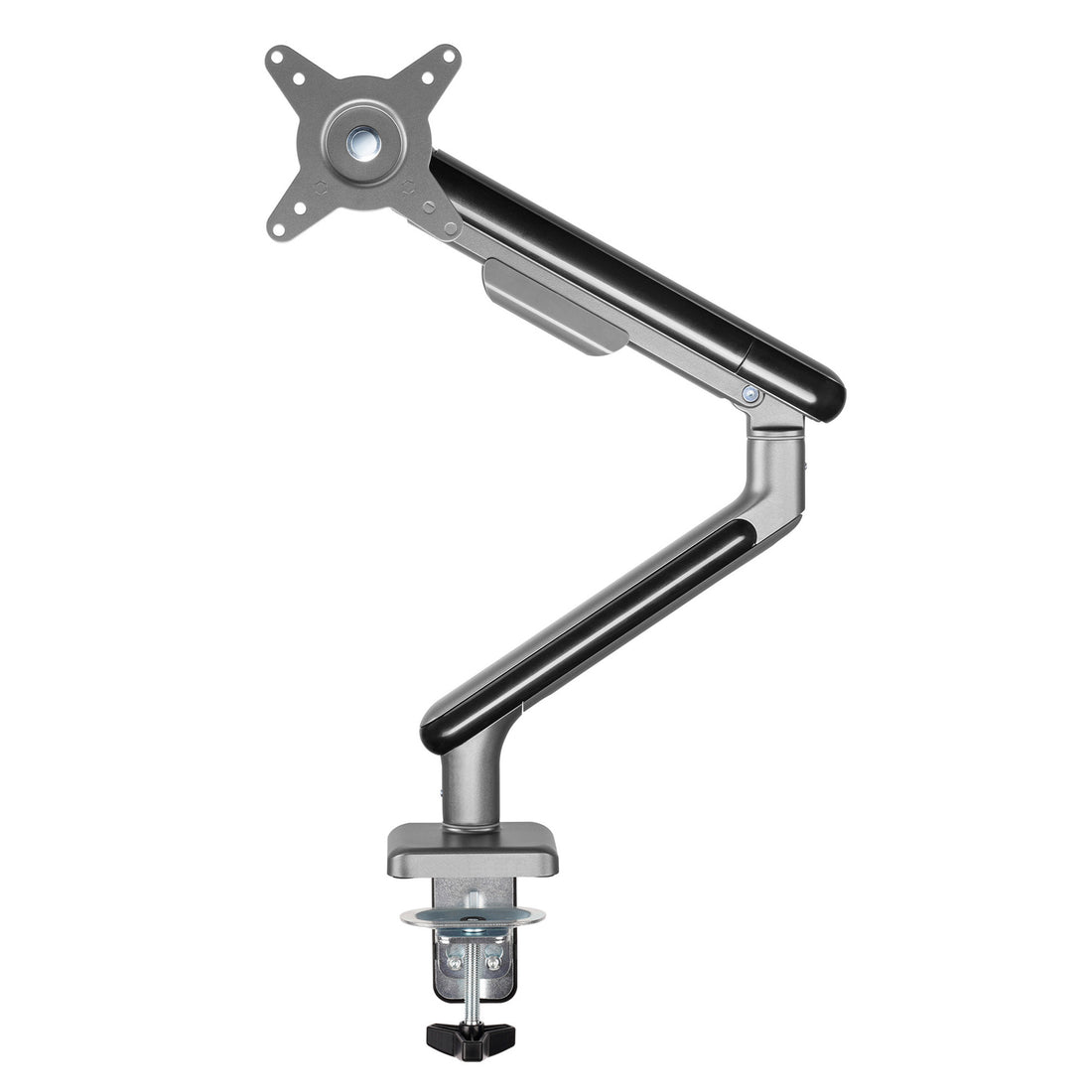
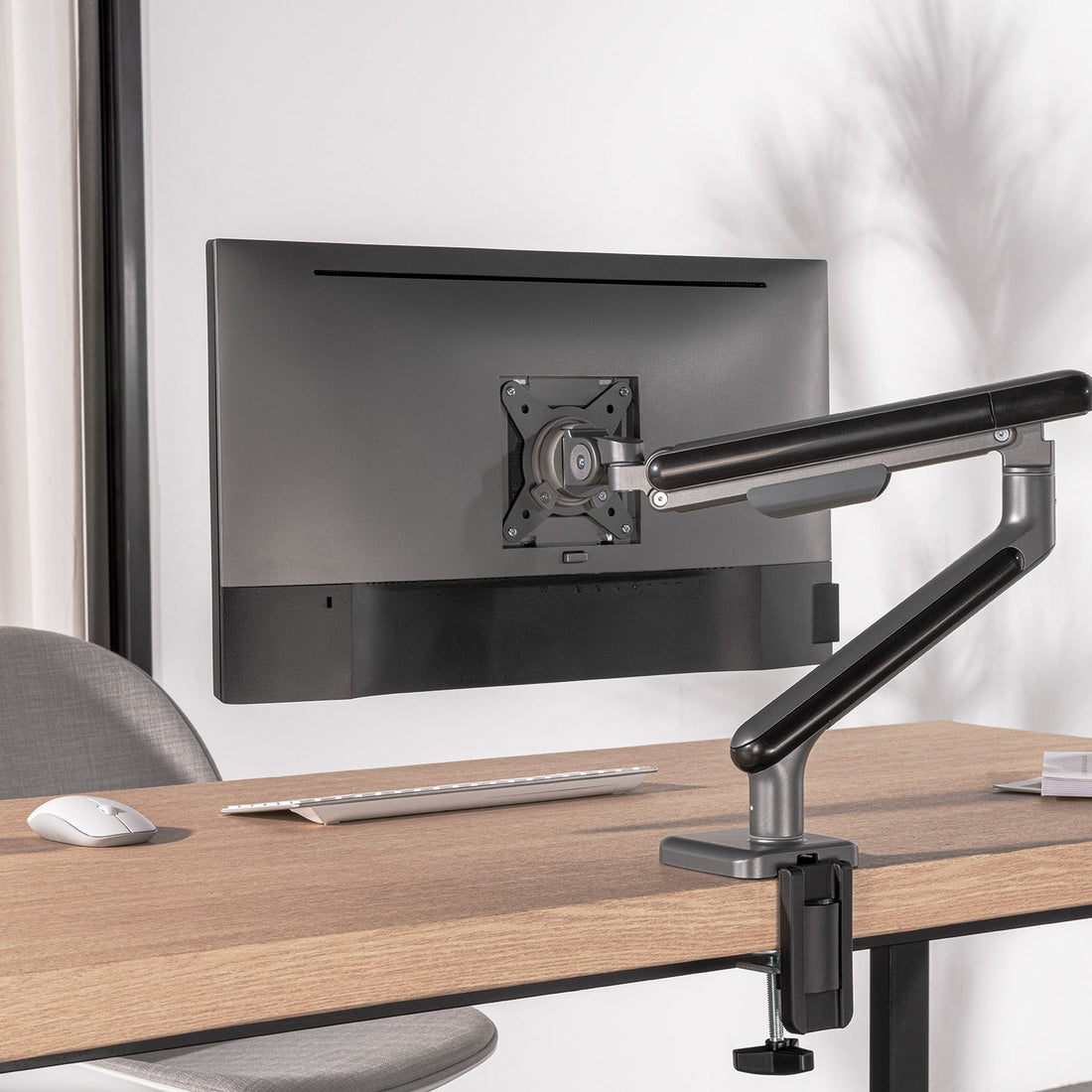
Choose the UpDown Neo Slim Monitor Arm if you want extensive positioning flexibility. It supports compatible monitors between 17 and 32 inches weighing up to 9kg.
For two standard monitors
Choose the UpDown Neo Slim Dual Monitor Arm. It supports two compatible monitors between 17 and 32 inches, weighing up to 9kg per arm, while allowing the screens to be adjusted independently.
For a large, heavy, curved or ultrawide monitor
Choose the UpDown Heavy Duty Monitor Arm. It is designed for compatible displays between 24 and 57 inches weighing up to 27kg.For a simpler VESA-mounted setup
Consider an UpDown Monitor Mount. Single and dual versions are available and are ideal when you want to raise your screens and reclaim desktop space without needing the full range of movement of an articulated monitor arm.
For a simple, timber monitor riser
Choose an UpDown Monitor Stand. The monitor sits on top using its existing base, so there's no VESA mounting or installation required. It's an excellent choice if your main goal is to raise your screen while retaining a clean, furniture-style appearance. The stands are available in a wide range of timber and desktop finishes, making it easy to coordinate them with your UpDown Desk.
Quick Comparison
| Option | Best for | VESA required? | Adjustability | Installation |
|---|---|---|---|---|
| Monitor Arm | Maximum flexibility and frequent repositioning | Yes | High | Clamp or grommet |
| Monitor Mount | Simple fixed or semi-adjustable positioning | Yes | Moderate | Clamp or grommet |
| Monitor Stand | Raising the screen simply and retaining the original monitor base | No | Low | None |
Product Comparison
| Product | Number of monitors | Finish | Max weight (per monitor) | Screen sizes | VESA Plate | Attachment |
|---|---|---|---|---|---|---|
| UpDown Neo Slim Monitor Arm | 1 | Black/Grey, White | 9kg | 17"-32" | 75x75 / 100x100 | Clamp or grommet |
| UpDown Neo Slim Dual Monitor Arm | 2 | Black/Grey, White | 9kg | 17"-32" | 75x75 / 100x100 | Clamp or grommet |
| UpDown Heavy Duty Monitor Arm | 1 | Black | 27kg | 24"-57" | 75x75 / 100x100 | Clamp or grommet |
| UpDown Monitor Mount Single | 1 | Black | 9kg | 17"-32" | 75x75 / 100x100 | Clamp or grommet |
| UpDown Monitor Mount Dual | 2 | Black | 9kg | 17"-32" | 75x75 / 100x100 | Clamp or grommet |
| UpDown Monitor Stands | 1 or 2 | Various | 50kg (in total) | Dual monitors up to 34" | NA | NA |
FAQ
What is the difference between a monitor arm, monitor mount and monitor stand?
A monitor arm attaches to your desk and to the rear of your monitor, giving you the greatest flexibility to adjust screen height, distance, tilt, swivel and rotation.
A monitor mount also attaches to your desk and monitor, but generally provides a simpler, more fixed or semi-adjustable setup.
A monitor stand sits directly on your desktop and raises the monitor using its existing base. It does not attach to the monitor itself.
Which option is best for me?
Choose a monitor arm if you want maximum adjustability and regularly reposition your screen.
Choose a monitor mount if you want to raise one or two monitors off the desk but do not need as much movement.
Choose a monitor stand if you mainly want to raise your screen and prefer a simple solution that does not require VESA mounting or desk clamping.
Do I need a VESA-compatible monitor?
You need a compatible VESA mounting pattern for most monitor arms and monitor mounts because they attach directly to the rear of the screen.
A monitor stand does not require VESA compatibility because the monitor remains on its original base.
What is VESA compatibility?
VESA refers to the standard spacing of mounting holes on the back of a monitor.
Common monitor mounting patterns include 75 × 75mm and 100 × 100mm.
Before buying a monitor arm or mount, check that your monitor's VESA pattern matches the product specifications.
How do I know whether my monitor is too heavy for a monitor arm?
Check the weight of your monitor without its original stand and compare it with the maximum supported weight of the monitor arm.
For dual monitor arms, check the maximum supported weight per arm.
You should never exceed the manufacturer's stated weight capacity.
How do I know whether my monitor is too heavy for a monitor arm?
Check the weight of your monitor without its original stand and compare it with the maximum supported weight of the monitor arm.
For dual monitor arms, check the maximum supported weight per arm.
You should never exceed the manufacturer's stated weight capacity.
Does monitor size matter when choosing a monitor arm?
Yes, but weight is equally important.
Monitor arms usually have both a recommended screen-size range and a maximum weight capacity. A monitor should meet both requirements.
Large ultrawide and curved displays may require a heavy-duty monitor arm even if their screen size appears to fit a standard model.
Can I use a monitor arm with an ultrawide or curved monitor?
Yes, provided the monitor is within the arm's supported screen size, weight and VESA specifications.
Larger ultrawide and curved monitors often require a heavy-duty monitor arm because of their additional size, weight and centre of gravity.
Should I choose a single or dual monitor arm?
Choose a single monitor arm if you use one monitor or want each screen mounted independently.
Choose a dual monitor arm if you use two compatible monitors and want both supported from a single mounting point.
For dual setups, also consider the width of each monitor and how you want them positioned.
Is a monitor arm better than a monitor stand?
Not necessarily. They serve different purposes.
A monitor arm is better if you want frequent and flexible screen adjustment.
A monitor stand is better if you simply want to raise your monitor while keeping its original base and avoiding the need for VESA mounting.
Is a monitor mount better than a monitor arm?
A monitor arm generally offers more movement and positioning flexibility.
A monitor mount can be a better choice if you want a simpler, more economical setup and do not need to move your screen regularly.
Can I use a monitor arm, mount or stand with a standing desk?
Yes.
All three options can be used with a height-adjustable standing desk.
A monitor arm or mount attaches directly to the desktop, while a monitor stand sits on top of it. In each case, the monitor moves up and down with the desk.
What are the benefits of using a monitor arm?
A monitor arm can help:
- free up desk space
- make screen positioning easier
- adjust screen height and viewing distance
- improve flexibility when moving between sitting and standing
- create a cleaner workstation
- make landscape and portrait screen positioning easier on compatible models
What are the benefits of using a monitor stand?
A monitor stand provides a simple way to raise your monitor without attaching anything to the screen.
It can be a good choice if you:
- do not need frequent screen adjustment
- want to retain your monitor's original stand
- have a monitor without VESA mounting holes
- prefer a simple, installation-free solution
- want a timber accessory that complements your desk
Will a monitor stand work with any monitor?
In most cases, yes, provided the monitor's original base fits safely on the stand and the stand is large and strong enough to support it.
Always check the monitor stand dimensions and load capacity before use.
Can a monitor arm damage my desk?
A correctly installed monitor arm should not damage a suitable desktop.
However, you should check the permitted desktop thickness, mounting method and load requirements before installation.
The clamp or grommet should be securely tightened without overtightening.
What is the difference between clamp and grommet mounting?
A clamp mount attaches around the edge of the desktop and usually requires no drilling.
A grommet mount passes through a suitable hole in the desktop and secures underneath.
The best option depends on your desk design and available mounting position.
Can I adjust the height of a monitor mount?
Monitor mounts usually allow height adjustment during setup, although they generally do not offer the same easy ongoing repositioning as a gas-spring or articulated monitor arm.
How should I position my monitor?
A good starting point is to place your main monitor directly in front of you at a comfortable viewing distance.
Adjust the height and angle so you can view the screen without repeatedly bending your neck or looking significantly upward or downward.
The ideal position will vary depending on your height, chair, desk and screen size.
Do monitor arms help with cable management?
Many monitor arms include built-in cable-management channels or clips.
These can help route power and display cables along the arm and create a cleaner workstation.
Leave enough cable slack so the arm can move freely without pulling on the cables.
Are monitor arms difficult to install?
Most monitor arms are designed for straightforward installation.
The process generally involves securing the arm to the desk, attaching the VESA plate to the monitor, mounting the screen and adjusting the arm tension to suit the monitor's weight.
Always follow the installation instructions provided with the product.
Which option gives me the most desk space?
A monitor arm or monitor mount will generally free up the most desktop space because the monitor's original base is removed.
A monitor stand still occupies some desktop space, although it can create useful space underneath the raised platform depending on its design.
Which option gives me the most adjustability?
If you use both monitors equally, positioning them centrally and symmetrically can work well.
If one screen is your main monitor, place it directly in front of you and position the secondary monitor beside it.
Can I use a laptop with a monitor arm setup?
Yes.
Many people use a monitor arm for their main screen while placing a laptop beside it or using a separate laptop stand.
This can help create a more flexible dual-screen workspace.
How do I choose between all three options?
Consider these four questions:
- Do you need frequent screen adjustment?
If yes, choose a monitor arm. - Do you want the monitor attached to the desk but do not need much movement?
A monitor mount may be suitable. - Do you want a simple solution without VESA mounting?
Choose a monitor stand. - How large and heavy is your monitor?
Always check the product's size, weight and compatibility specifications before purchasing.
Need help?